
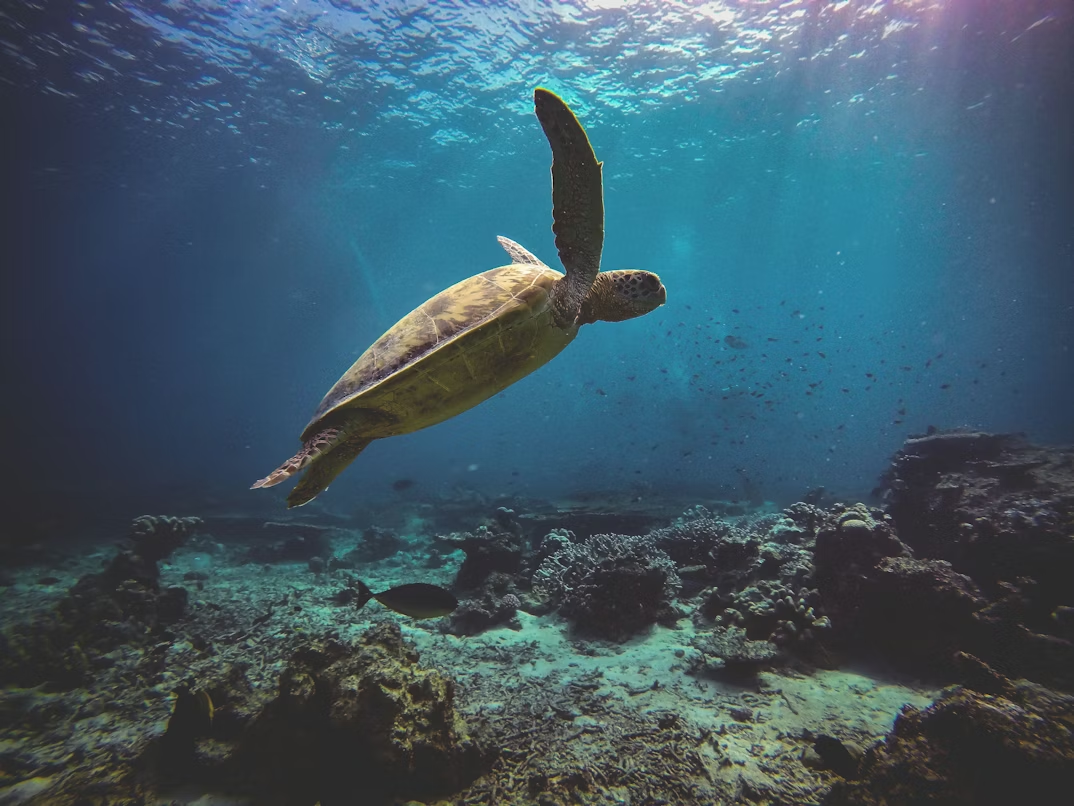
Sometimes the world gives us a reminder that recovery is possible — and the story of the green sea turtle is one of those rare, energising moments. After decades spent on the edge of extinction, this ancient ocean traveller is making a remarkable comeback thanks to people, communities, and countries choosing to protect what matters.
A Species Pushed to the Edge
For most of the 20th century, green turtles were in deep trouble. Hunting, egg collection, coastal development, and fishing gear all took a brutal toll. Their nesting numbers fell so sharply that experts feared we might lose them entirely — a species that had survived the dinosaurs but struggled to survive us.
What Changed?
We did. Slowly, steadily, and across borders, people stepped up.
- Protected beaches gave females safe places to nest again.
- Stronger fishing regulations helped reduce accidental catch.
- Marine protected areas created safer feeding grounds.
- Local communities became leaders in protecting eggs and hatchlings.
This is one of those moments where small actions, multiplied globally, have reshaped a species’ future.
Signs of a Comeback
In many parts of the world, green turtle numbers are rising — in some places, spectacularly. Beaches that once saw only a handful of nests now see hundreds or even thousands. You’ll hear stories of hatchlings racing to the water under the stars, just as they did centuries ago.
It’s not a full recovery — not yet — but it’s a genuinely hopeful shift. And we don’t get enough of those.
Why This Matters
A returning turtle population is more than a win for one species. Green turtles help keep seagrass meadows healthy, which in turn support fish, store carbon, and stabilise coastlines. When turtles thrive, entire ecosystems breathe a little easier.
The Lesson for All of Us
This story shows what’s possible when we work together — scientists, governments, coastal communities, and everyday people who care enough to act. It’s proof that conservation isn’t just damage control; it’s future-building.
If we can help a species this ancient and vulnerable bounce back, imagine what else we can heal.